
I'm Building a Brain for Your Business
Key takeaways
- Circonomit maps a business into interconnected digital objects, a brain for the company.
- It reveals causational relationships across the whole business, not isolated numbers.
- Fragmented Excel sheets and reactive monthly statements are not enough to steer a company.

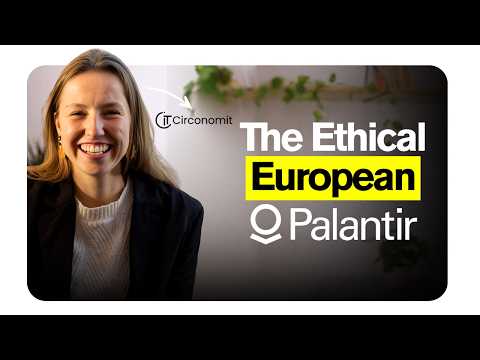


In the VENTURES podcast with Viraj Acharya, Dana Aleff, CEO and founder of Circonomit, explains how the company builds the brain of your business: enterprise software that maps reality into interconnected digital objects, so teams understand cause and effect across the entire business instead of relying on fragmented spreadsheets and reactive monthly reports.
Bereinigtes Transkript (englischsprachige Folge). Sprecher: Viraj Acharya (VENTURES) und Dana Aleff, Mitgründerin und Geschäftsführerin von Circonomit.
Intro
Dana Aleff: Finally, it''s summer, it''s very hot, and I''m in a good mood chatting to you today.
Viraj Acharya: Dana, when you''re in a good mood, I''m in a good mood. Sun''s out, Europe''s on fire, we love to see it. Great, let''s get started.
Dana Aleff: Let''s do it.
Viraj Acharya: Give me some context. I mentioned on the stream that you are essentially the European Palantir, but if it were ethical. Give us some intro into the background, yourself, the company, and let''s get into it.
Dana Aleff: Yeah, okay, let''s start. That was a big headline, I''m finally growing into that. So, just on my background: myself, I''m Dana, I''m something between a nerd and an artist. I love math. I''m a mechanical engineer by background. I spent the last 5 to 10 years just thinking about root cause relations of our world, and started in production engineering, energy system engineering, and now we''re here, production companies are our clients. I just got obsessed with how we can make modeling the world and making complexity manageable 10,000x faster.
Building a brain for the company
Viraj Acharya: We''ve got to hit some talking points. It''s the beauty of this stream, it''s all happening in real time, it''s not pre-prepared. So we get to ask you the hardest questions on the planet and make you look amazing. How the hell do you build a product like this? I was doing a lot of research for this particular segment, because I think it''s very important to highlight that the work you''re doing isn''t just a superpowered Excel. It''s almost as if you''re building a brain for the company, right? That''s how you described it to me. When we think about the brain and the causal relationships, how do you end up building something like that? Can you technically break it down for me?
Dana Aleff: Yes, of course. So, we just started, we had no idea about startups, no idea how complex it could be. We just went in, and when we were working with the industry, we realized, and I guess that''s a good thing about me and my co-founder, that we can think very abstract. So for us, let''s take this bottle, let''s take myself, let''s take the building I''m in, for us in the digital world it''s all an object. It has a name, it has a unit, it has a number. So in this sense we have the ability to make an ontology layer, basically modeling reality in a very simple way, and that makes it possible, compared to most computer systems, to connect, let''s say, me with this building, connect the bottle with myself, then split this bottle into different objects. In this way it''s very tangible, very easy, and on the other hand very abstract, so that we have the ability to build reality and map everything that we can see, that we can feel, represented as a digital object. Give it any information you can think of, a name, a number, the size of the building, how many rooms it has, what electricity it consumes. This way there''s on the technical end no restriction of what we can represent. If an Excel is a very powerful table, then we are the ones building trees and mapping all these wires in the company. And we start with one question, it''s very easy: okay, I have a power consumption, somehow I need to get it down, I don''t know where I consume all that power. Then we can break down the power by an area key, break it down to different machines, break it down to different departments of your company, and so on. So it''s basically decomposing where the energy flows, and in this way you get the first digital representation of your energy flows and you know where to improve. And you can do that with everything: okay, we have people working in the company, they are on different projects, so we can map the hours spent on projects, mapped to the project, and the project mapped to the revenue, and this is mapped to the overall financial performance of the company. So in a sense you''re calculating through everything you can imagine, and it''s one question at a time, one model at a time, until we are done.
How companies work today: 50 Excels
Viraj Acharya: I love it. How often do the companies, the enterprises you''re working with, have this level of mapping over their company to the degree you need it, or is a lot of the work initially actually getting a breadth of what is going on?
Dana Aleff: Yeah, it''s like two things. How are they solving it today? They have like 50 different Excels, and then they try to connect them, and sometimes it takes longer to look up information in an ERP system or in an Excel than you have time to take a decision. So the first problem we are solving is simply that we make that 10,000x easier and faster.
Viraj Acharya: Not 100x, 10,000x. I love it.
Dana Aleff: Yeah. We stopped the clock on how long it would take to map the Excels, and how easily even a person that doesn''t understand processes or can''t do math can build a model on a visual canvas that can calculate. So that''s the first thing, just unlocking the time people spend today. Business controllers, which are a persona we are working with, break it down, they have the deviation in their financials, and they really go down to, why did that machine break down and what did that cost me in euros. So they go into detail. And then there''s a second thing we unlock, which is: we have the ability to also map causal relations. When you improve something, sometimes it has an upside, sometimes a downside, and there are loops, things depend on each other. What an Excel does is always think straightforward: you insert an input here and then you have an output. What we make possible is to unlock and understand dependencies that you couldn''t manage before. I always say we can encode the gut feeling, because we make it possible not only to calculate through something from A to B to C, but also to map all these relations. That wasn''t possible before with simple tables, just by the pure idea of how the data structures were. So one is an efficiency thing, and one is unlocking something that wasn''t possible before, because we make it accessible and representable in the digital world.
The visual canvas
Viraj Acharya: I''ve got so many questions running through my mind. When we think about the causal relationships existing between systems, the different Excels, how did you come up with something someone is going to understand on a visual plane? Is it very much like a visualization, like a Miro board, or is it something more complicated?
Dana Aleff: No, it''s like a Miro board. I even showed it to a VP Operations yesterday, and he was shocked in a positive sense, because he expected some Microsoft Power BI, and he said it''s so much better. Because Microsoft Power BI and all the analytics tools you have are hardcoded and very powerful, but in a sense that is your analysis, and then you think, oh, I want to tweak a bit here, I want to connect it with this one. So all the simulation, that''s what we do. If you know Miro, if you know Figma, it''s basically us, but we can calculate. It''s that easy.
Viraj Acharya: So you''ve taken that UX, plugged it onto a super brain, and ship it out into the world.
Dana Aleff: Yeah. And since you asked how we came up with this, I would say it''s very hard work, being obsessed. I never stop. I guess I chatted to over 2,000 people in the last two years. I was always asking, here''s what I have, what do you think? I even asked people, okay, that is what I explained to you, what did you understand? Just brutally honest to whomever I talk to: okay, give me your opinion, what is the value? So it''s hard work, knowing that what we''re solving is one of the hardest things we could imagine, talking to people every day, iterating, and just being obsessed with iteration.
Why this hard problem
Viraj Acharya: Why is this the hard problem you''ve decided to solve? You could apply your mind and the team''s mind to everything, but this is the one. It can unlock so much economic power for the company, it unlocks capital, it gives people back time. What''s the driving motivator here?
Dana Aleff: Oh, you know, I was a nerd, I was in research, I was working with industrial companies, and I really cared about the environment. Because for me it was so ridiculous that we have systems that track money, then we have some trends about sustainability, then no one cares about the social aspects, and for me it''s all so logically interconnected. If someone in the company is sick, you have to pay them but they don''t earn you money, so it makes total sense to understand the social parts. Then the same with resources. Some people still believe sustainability is just a miracle, but it''s reality. Very unemotionally talking: you have resources, if we consume more than grows back, it will get more expensive, because resources will get scarce. I was looking through that for years and I was like, oh my god, people are just so bad at making decisions, not because they are stupid, but because we''ve built a world that got faster and more complex, and we forgot to write down on the way, while we were building it, how all things are interconnected. So I just got obsessed with making good decisions, and it is all interconnected. If it''s better for the financials, it''s better for the people, it''s better for the environment, because it''s one nested system. I truly care about humans, and I appreciate the financial system and capitalism for being a tool, not the goal of everything, because if you''re not happy, having money isn''t enough. So I was like, okay, if this is all interconnected and we''re currently not able to manage it, and people are overwhelmed or scared, then I looked at where people get very happy and excited, and that is with games. So I thought, what if we would build enterprise software that is as easy as a B2C app, or as games?
Viraj Acharya: To encode reality?
Dana Aleff: And yeah, the storyline is of course that you save money, but for me it''s truly because I care about humans. And since it''s all interconnected, I thought, someone has to do the work of encoding reality that we as humans forgot to do for a few decades.
Viraj Acharya: It feels like more than a few decades, though, more like a few centuries at this point. The way you describe it has got me thinking. It feels like Sims for enterprise, but those Sims are your exact business.
Reactive to proactive decisions
Viraj Acharya: I want to touch on something. The reactive-to-proactive decisions that you''re supercharging: did you think about the latency, that that is actually what allows us to make a decision? Or has the outcome of using the product been that having these proactive decisions in real time is beneficial to the business a thousandfold?
Dana Aleff: Yeah, it''s the mixture. The problem statement sounds ridiculous, but if it takes longer to look for information in a system than you have time to make a decision, then we have a problem. How is it today? Most businesses, I would say nine out of 10, are like: oh, monthly financial statement, damn it, things worked out not the way we planned. That is a lag measure. Accounting the way we did it is a lag measure on the status quo, when it''s too late. We''re changing that process: if there is an operational thing happening, a machine breaks down, someone gets sick, whatever, how does that operational action that happens daily, where you can actually steer your business, how does it map to the core KPIs of your company? That''s basically the model, that''s a brain. So, as you said, we act before it''s too late, because otherwise, if we just do accounting, it''s too late.
Viraj Acharya: We don''t want to be searching for information to make decisions, we want it teed up on a plate so we can inform ourselves better.
The model behind the scenes
Viraj Acharya: When it comes to the model behind the scenes, the brain, what does that look like from your end? I don''t want to dive into the crown jewels, but on a broad scale, are you building multiple models that can think together, or is it a bit more simple and I''m overcomplicating it?
Dana Aleff: Since you mentioned Palantir, where is Palantir coming from? From working with large companies, having loads of data, running an analysis, extracting the patterns, and mapping this into an explicit ontology. The way we are coming, especially in the German and European market, is that some of the information is not digitalized yet. So we build the tool where the person working the production line, they know, oh, this machine will break down, and they not only know that it breaks down 2 hours per month, they also know why it''s breaking down. They not only have the information, they also have the dependency. We give them the tool to really insert a data block, put the information in, connect it, and then we can build a model as big as you can imagine. We''re working on product functionalities so that if you have five plants and you''re producing a product, it roughly looks the same, so in a sense you can copy your brain of this production facility. Maybe it has another energy source, because one has solar power and the other is still running on fossil fuel, but the production of this bottle roughly has the same machines in both plants. This way, one question is one submodel, and the brain of your company is the sum of loads and loads of single models you can put together.
Simulation and the strategic twin
Viraj Acharya: Honestly, you''re blowing my mind. When it comes to the simulation aspect: is the essence that, as an enterprise, once we''ve mapped everything, I should be able to run experiments on what is possible if I choose to change certain things in my supply chain, my product output, and how marketing affects my business as well?
Dana Aleff: Yeah, 100%. If you talk to my co-founder, he would say we''re building the strategic twin of the company. So it''s the most valuable asset. You can copy and paste it, and it''s like a simulation of your business. Take a simple sales and marketing example: you have different people in the department, you have different initiatives, I don''t know, cold outbound, write a LinkedIn ad, and so on. That would be one model, mapping the time spent of people and the budget spent on the initiatives, and then the initiatives map to the revenue. So you could understand, okay, if I play around here, what does it mean for revenue? And you can imagine, oh, should I employ two or five people, what would it mean? Then you could build a model: what is the productivity of that person, what would it cost me in salary, and so on. So we are not hardcoded in any way, you can map one input to the other the way it represents your reality in that moment.
AI and language to model
Viraj Acharya: As the world becomes more autonomous and automated in the things we do, does your life get easier when it comes to mapping?
Dana Aleff: What''s very handy is this language-to-model. We forgot to write down everything once we built our company, so now we have to build the model first. We call that the onboarding. And that''s very cool, because you have data that holds knowledge that you can map to the model, where you can extract patterns, then you have humans, and then you have world knowledge. For example, you have a machine, you don''t need to go to the production facility to look up what the electricity consumption is, you can also look it up on the internet, and if you want even more primary data, of course you should insert a sensor. This is where this whole autonomous and AI side helps, in helping people think and code their reality. That''s how I build models, by the way: okay, we have that company, they have this problem, that''s their steering KPI, I know that A, B, C, D are the influencing factors, did I forget something? And then, if I think about five things they have, with the language model you also understand, oh, there are another two things I didn''t think of, so we can map that to the model. We think about this whole AI and language as a very simple entry threshold to encoding reality, that just helps you think. I chatted with a VP yesterday, he said, every time I go to work I talk into my phone, and it would be so cool if it not just gives me a visualization but I can actually calculate through it.
Viraj Acharya: That is insane. I feel like I''m using the word insane because you''re consistently blowing my mind.
The largest decision to optimize: how to build a nation
Viraj Acharya: You mentioned that an investor once asked you a question: Dana, what is the largest decision that you would optimize?
Dana Aleff: Yeah, I would say how to build a nation. I thought, if I say that and people see the recording, they''ll think I''m crazy.
Viraj Acharya: We love a bit of crazy, though. I think it''s what makes Europe the best place in the world.
Dana Aleff: And that''s where the nerd comes out again, right? Because for me everyone is an individual, and they are grouped into something that''s called a company, and then they''re also grouped into something we call a nation. For me it''s both a system. I believe we manage companies, but ultimately, if a whole nation, the whole economy, is bad, that will affect the companies and vice versa, because the nation in a sense is just the sum of the companies. So the way I think about it is encoding one root cause relation at a time, and once we''re done with the companies, we think on nation level.
Viraj Acharya: Then let''s fast-forward a little bit. On broad strokes, how would you do it?
Dana Aleff: The same as I would do today. I would start with: what is the question we should ask as a nation, what is the responsibility of a nation? That''s actually a very interesting question.
Viraj Acharya: What is the responsibility of a nation? To create a society that benefits all of the individuals inside it, the perfect socialistic state. I think America is probably more, how do we extract the most value out of all the individuals that exist in our society. I don''t know, what''s your take?
Dana Aleff: I would say I like the America thing, it''s also about protecting your nation, that''s what all the discussions we have in public are about at the moment. And I feel it''s the same as if you''re a company: you have responsibility for your employees, because they give you their lifetime and you owe them money to run their life. You asked how I would start. I would ask, what is the steering question of a nation, and then I would start encoding it. Okay, if we say it''s protecting your humans, giving them a safe space, healthy, giving them a room so they can create output, which is again a thing that we as a nation can exist on if everyone has their responsibility, what does that mean? And then I would go vertical by vertical: okay, they need water and power supply, they need a safe infrastructure. And then I would always ask, what does that depend on, and always ask this why, why, why question, and then build the model.
Trade-off decisions and optimization
Viraj Acharya: You make it sound so perfectly simple to build a nation.
Dana Aleff: Well, with the political debates, I sometimes feel like we are talking gut feeling, black and white, most of the time. Simple example from the production: a machine breaks down, and so for the first five days your customer will wait for the delivery. From day six, it will cost you $10,000 a day for not delivering. Then someone would ask, okay, we have to wait 2 weeks for the source part from the supplier, should we rather get someone quicker that flies in the part supply, so we can start producing on day three? It depends: if you would have to pay the customer at day 30 and not at day six, then you should wait. Everything we have is an optimization and trade-off decision, and I think that also applies at nation level. What I truly want to do is give decision makers, on company or nation level, the tool to know that things are not black and white, but to determine the right trade-off decisions. I think that''s not possible at the moment, because we can only measure the outcomes, but not measure complex trade-off decisions. And complex trade-off decisions are something we had in math all the time, because it''s just an optimization problem. So I would say we are democratizing optimization problems, bringing the ability to solve them to everyone.
Viraj Acharya: And that''s the purpose of a nation state?
Dana Aleff: In the end, for me it''s always a hard question, what is a great nation, but I guess it would be good if we already started not discussing on the gut feelings of overtired humans, but starting to understand what it really means to have a good life, to provide a good life, to provide a secure state for these humans, how do we define it, and also quantify and qualify the information.
Building the team
Viraj Acharya: Throughout the conversation, you see the world, or you can think about it, in binary or black and white, but at the same time deeply human. How do you build a team that has to understand both?
Dana Aleff: I would love to bring my team on one day to your show.
Viraj Acharya: We''re absolutely going to have them. At some point we''re going to have to do a livestream with all of them, because they seem like the most crack people on the planet from what you''ve said.
Dana Aleff: Yeah, I love my team, they''re amazing. It''s about getting people on the team who can think abstract but are genuinely good human beings, so they can read between the lines and truly care about the other person sitting in front of them, caring about what happens to humans and the world, but having this ability to think in an abstract way. And also with this decision making, I think you cannot quantify everything in numbers. We have that in the development too, it will take a few years: how can we quantify things that are emotional, that you can''t quantify in numbers? That''s a thing we can chat about in the future, we haven''t encoded that yet. If people behave irrationally, what are you going to do about it? That''s a very human problem.
Quantifying the human
Viraj Acharya: Do you think that''s a human problem you can solve for, or is it just humans being humans and it will never be possible to do that?
Dana Aleff: We can''t solve that today. I love psychology, and I don''t want to live with the fact that we can''t solve that. I still believe that if humans are born, they are not bad, they are good. One day I went to the kindergarten and talked to the kids, and literally 20 out of 20 kids understood a bit more than some leaders in their 50s or 60s. So I believe that if kids are born, they are good. It''s getting very philosophical now, but I have no idea how to solve that yet. That''s how humans behave, humans will be humans, but I''m still wrapping my mind around it day by day. A solution I will come up with.
Viraj Acharya: Dana, if anyone''s going to do it, it''s probably going to be you at this point. So I appreciate the time. I''m looking forward to doing this again, thank you for blowing my mind consistently over the last 20 minutes. We absolutely have to do this again with the rest of the team.
Dana Aleff: Yeah, me too. Thanks so much for getting me on, and happy to continue anytime.
Viraj Acharya: I appreciate it. We love Europe, we love the teams that are building out of there. Thanks so much, Dana. Ciao.
Dana Aleff: Yeah, thank you. Ciao.